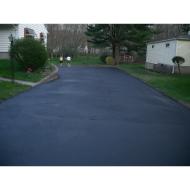
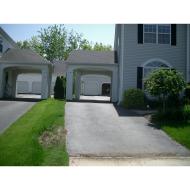
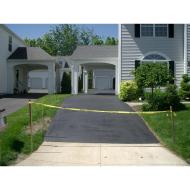
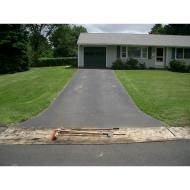
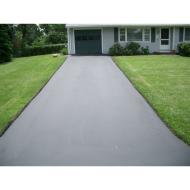
DRIVEWAY SEAL COATING AND REPAIR
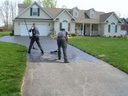
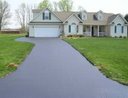
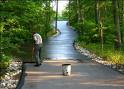
Make your driveway look and feel new again with our seal coating special of only .29 cents a sq.ft. This includes two (2) coats of premium sealer applied by hand, and willl last for a period of 3 to 7 years. Or, we can apply one (1) coat for only .21 cents per sq.ft. with a mid-grade sealer, and it will last for a period of 1 year. Crack repair and patching is an additional charge and for above pricing is for labor only.
We also do driveway repairs, and any of your concrete needs from forms to pouring...from patios to slabs call us today for pricing!
Why do you need your driveway seal coating?
Why should I seal coat my driveway?
Asphalt pavements are made up of stone (aggregate) fine stone or sand, and asphalt cement. The asphalt cement is what gives the pavement it’s black appearance and is the “glue” that holds everything together. Often I joking answer this question in person by asking “why do you paint the wood on your house?” It’s obvious of course; to preserve the wood and protect it from damage from the elements. The same is true of asphalt pavements. Have you noticed that new asphalt is jet black but soon begins to fade and in a year or two has turned gray? That’s oxidation. The effects of the sun and rain/snow oxidizing the asphalt cement in the pavement. Given enough time the pavement becomes brittle and has less resistance to the loads placed on it. This can lead to a multitude of problems. Asphalt is a petroleum product so any other petroleum derivatives that contact it will dissolve into the asphalt, weakening or dissolving the asphalt’s “glue like” properties. These substances commonly include motor oil, transmission/power steering/ or brake fluids, gasoline, and perhaps household solvents like some cleaners. It’s common to see asphalt damaged by concrete cleaning products used on a sidewalk but rinsed onto a driveway. And the other common products mentioned can come from anywhere; a leaking car, oiling the chain on the kid’s bikes, spills while servicing the lawnmower, the list is endless. A good quality seal coating will protect the asphalt pavement from all these damaging factors while providing the curb appeal of a new-looking black appearance. It’s often overlooked that seal coating not only seals the harmful elements out but seals the beneficial properties of the asphalt cement in. Many years of research has proven that proper maintenance including seal coating can double the life of an asphalt pavement. (Seal coating is not new by any means. The first seal coating materials were developed in the 1930’s for Standard Oil to help protect the pavement in their service stations.) Because of the scope of this subject there is another article devoted to types of sealers, doing it yourself vs. hiring a contractor, etc.
What about those cracks in my driveway?
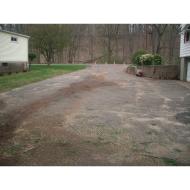
Those need immediate attention. A host of problems leading to major failure can result from the small start of a few cracks left unattended. You may wonder why we address this apart from seal coating. Seal coating is for sealing an asphalt surface. It does nothing of value for cracks larger than a “hairline” or in layman’s terms the size of a pencil lead or larger. Actual cracks in the pavement require specialized crack sealant materials. Left alone cracks allow moisture to penetrate the asphalt surface. Water expands as it freezes, so moisture in the cracks does the greatest damage in the winter months, and it does more damage faster in freezing conditions. “Homeowner grade” crack sealants are always cold applied and must dry. (Contractors use a superior method with hot-applied materials that set as soon as they cool). The main issue in sealing cracks is that they MUST be clean, dry, and have no vegetation present prior to any sealing. Homeowners should always shop for a sealant containing the highest possible amount of rubber. The rubber allows the sealant to expand and contract with the pavement. Cheaper crack “fillers” are hard when cured and as the pavement moves they will separate from the asphalt, and allow moisture to penetrate again.
Other Frequently Asked Questions
Q- Do I need to do anything to prepare for my driveway or parking lot to be seal coated?
A- If you fertilize your lawn or plantings, please don't fertilize for a week prior to our visit. Fertilizer products will discolor the sealer products. The pavement must be dry. Please don't hose off the parking lot or driveway in the 24 hours prior to seal coating. Otherwise, just be sure that the work area is clear from all vehicles, toys, bikes, grills, etc. Also, be sure that your pets are either inside or secured away from the work area.
Q - Will you get rid of grass growing up through my driveway?
A- Our professionals will cut down the grass areas. However, without a regular spray of some type of weed killer, the grass will come back. Grass has the power to grow through the asphalt. It easily has the power to grow through sealer.
Q - When is the best time of the year to seal my driveway or parking lot?
A- We generally do sealing work from April 1st through the end of October (give or take a couple of weeks). The outside temperature must be above 50 degrees in order for the sealing process to cure correctly.
Q - Does weather make a difference in the seal coating process?
A- Yes. If it has rained the previous evening or if rain is in the forecast for the day scheduled for work, Seal Pros may call to reschedule your appointment. We generally call between 8:00-8:30am. We recognize this is an inconvenience but dry pavement is important to proper curing of the sealant. If it rains during or immediately after work and drying of the seal coat is adversely affected, Seal We will also take responsibility for any problem areas and correct them at our cost.
Q - How soon until you can walk on a driveway after seal coating?
A - Generally 6-8 hours, but your representative will advise you on the drying time for your particular job.
Q - How soon until you can drive on a driveway after seal coating?
A - Generally 24 hours, but your representative will advise you on the drying time for your particular job.
Q - My driveway (or parking lot) is brand new. Should it be sealed? If so, when?
A- It is recommended that a newly asphalted surface should be sealed within its first year, but no sooner than 60-90 days.
Q - How often should I fill the cracks in my driveway?
A - Yearly. The asphalt will continue to expand and contract with the warm and cold weather. Our professionals use top commercial products; however the filler cannot stop the asphalt from expanding and contracting. The crack filler will prolong the life of the asphalt by preventing water getting into the asphalt foundation.
Q - If I see cracks in my driveway, is it time to seal coat?
A - Cracks are a sign that the driveway is in need of mainteance and repair.
Q- There are a lot of cracks in my driveway. Can you still seal it?
A- Seal coating is a preventive measure, but will not "fix" cracks. Cracks that are more than an 1/8 inch in width should be filled first. We will fill the cracks prior to seal coating for an additional fee.
Q - What is the difference between applying sealant by spray or by brush?
A- For residential customers, sealant should be applied by brush. This is an important distinction when comparing services of sealing companies.
We hope this gives you some basic answers to the questions many people have. For more information please feel free to email us at mail